Martyrs of Tokwon · 9 / 38
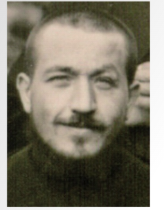
Brother Ludwig Fischer (裵, 1902–1950) was born on October 23, 1902, at Unterstelzhausen in the parish of Marktlustenau, Diocese of Rottenburg-Stuttgart, and was baptized Karl. His parents Wendelin and Helene had five sons, three of whom died young; the two who grew to manhood both received religious vocations — the elder entering the Franciscan monastery at Waldbreitbach, the younger, Brother Ludwig, St. Ottilien. After primary school he was apprenticed from seventeen to his father, a master shoemaker; he qualified as a journeyman in 1922 and worked at home with his brother.
The next year he resolved on monastic life, writing in his petition: “I have long desired to enter a monastery and live serving God, and I have weighed this carefully.” His pastor’s letter of recommendation rated his aptitude highly: “A fine young man, well brought up, whose life to this day is without reproach. Morally upright and deeply devout, I judge him well suited to religious life and the missions.” He entered St. Ottilien, received the name Ludwig on October 14, 1923, made his first profession on October 15, 1924, and was sent to Seoul on September 27, 1925, arriving on November 19 with ten brothers from St. Ottilien and Münsterschwarzach and four Tutzing Benedictine sisters sent to found the new convent at Wonsan. In the Seoul monastery he had charge of the shoemaker’s shop.
After the monastery moved to Tokwon he made his perpetual vows on New Year’s Day 1928, together with the Korean Brother Vincentius Pang Sam-dok (方三德, 1898–1970). At Tokwon his ability shone: besides the shoe shop he was given charge of the Korean lay-brother candidates and of the printing press, and even served as the monastery’s driver. The press above all was his charge — typesetting, printing, and binding, he produced many books. It prospered: new workrooms were built in 1937 and a new press installed in 1940. A report of 1940 records thirty thousand catechisms and ten thousand missals printed at Tokwon, and some five thousand copies of an apologetics title sold. But this press was to bring on him a cruel trial.
When the communist regime took power in the North after 1945, the Christians feared for their survival. In December 1948 the Wonsan police arrested the procurator, Fr. Dagobert Enk, on trumped-up charges of illicit brewing and tax evasion. The graver matter began at the press at the turn of 1948–49. One day Brother Hilarius Hoiss saw an employee dragging a sack stuffed with paper toward the mountain and told Brother Ludwig, but no one thought much of it. In mid-March two employees were arrested, charged with printing anti-communist leaflets; on April 28 the shop’s supervisor, Brother Ludwig, was arrested. It was all a scheme of the security bureau: agents posing as anti-communists had entrapped the press workers.
On this pretext Tokwon Abbey was publicly branded a nest of subversives plotting to overthrow the regime. On May 9 and 11 the security police searched the abbey twice, arresting the German brothers and Korean clergy and sending them to the Pyongyang prison. Brother Ludwig, taken to Pyongyang already on April 28, was held in solitary confinement and never allowed contact with the brothers brought in later. Much later he was put to work in the laundry. One day, when his socks had torn to shreds at the heavy work, he asked a guard in his wretchedness: “What kind of treatment is this? If word were sent to my house they would send me all I need. Please, send them word.” His eyes filled with tears. He knew nothing of the closing of Tokwon Abbey — he could never have imagined that in his monastery cell a portrait of Kim Il-sung hung now in place of the cross (the authorities had taken over the abbey and seminary for a college of agriculture). He and the seven convicted brothers remained in the Pyongyang prison while the rest were taken to Oksadok on August 5, 1949. After that, all that is known of him is a note smuggled to Brother Conrad Lim Kun-sam (林根三, 1919–1986): “To Brother Lim — many thanks. I am well. Do not worry. Written by Brother Ludovicus. Brother Ludovicus O.S.B.” That was the last. On the morning of October 11, 1950, just before the allied forces retook Pyongyang, he was led away — to his death, beyond any doubt.
한국어 원문
배 루도비코 수사 1902년 10월 23일 생, 독일 로텐부르크 슈투트가르트 교구 출신 세례명: 칼 첫서원: 1924년 10월 15일 한국 파견: 1925년 9월 27일 소임: 덕원 수도원 인쇄소 책임자, 청지원자 책임 체포 일자 및 장소: 1949년 4월 28일, 덕원 수도원 순교 일자 및 장소: 1950년 10월 11일, 평양 인민교화소
배 루도비코(Ludwig Fischer, 裵, 1902-1950) 수사는 1902년 10월 23일 독일 로텐부르그-슈투트가르트Rottenburg-Stuttgart 교구 마르크트루스테나우Marktrustenau 본당에 속한 운터쉬텔츠하우젠Unterstelzhausen에서 태어나 칼Karl이라는 세례명으로 세례를 받았다. 그의 아버지 벤델린Wendelin과 어머니 헬렌네Helene는 슬하에 아들 다섯을 두었는데 그 중 셋은 어려서 세상을 떠났다. 나머지 두 아들은 커서 수도성소를 받았다. 큰 아들은 발트브라이트바흐Waldbreitbach에 있는 프란치스코회 수도원에 들어갔고, 작은 아들인 루도비코 수사는 상트 오틸리엔 수도원에 들어갔다. 그는 초등학교를 졸업한 후 17세부터 제화장인이었던 아버지 밑에서 제화공 견습을 받았다. 1922년 제화기능사 자격을 딴 그는 고향에서 형과 함께 일했다.
그 이듬해 루도비코 수사는 수도생활을 하기로 결심했는데, 입회청원서에 이렇게 적었다. “저는 오래 전부터 수도원에 들어가 하느님을 섬기며 살기를 원했고, 이에 대해 심사숙고했습니다.” 본당 주임신부 역시 수도자로서의 그의 자질을 높이 평가하는 추천서를 써주었다. “훌륭한 청년이고 좋은 교육을 받았으며, 지금까지 흠잡을 데 없이 살았습니다. 윤리적으로 올바르고 신심이 깊기에, 수도생활과 선교활동에 아주 적합하다고 판단합니다.” 그는 상트 오틸리엔 수도원에 입회하여 1923년 10월 14일 루도비코라는 수도명을 받고 수련기를 시작했다. 1924년 10월 15일 그는 첫서원을 했고, 1925년 9월 27일 서울로 파견되었다. 그리고 같은 해 11월 19일 상트 오틸리엔 수도원과 뮌스터슈바르작 수도원에서 파견된 10명의 수도형제들과 원산에 새로운 수녀원 설립을 위해 파견된 4명의 툿찡 포교 베네딕도회 수녀들과 함께 서울에 도착했다. 서울 수도원에서 그는 구둣방 책임을 맡아 일했다.
서울 수도원이 덕원으로 옮겨온 후 새해 첫날, 1928년 1월 1일 그는 한국인 방삼덕 빈첸시오 수사(方三德, 1898-1970)와 종신서원을 했다. 그의 유능함은 덕원에서 빛이 났다. 그는 덕원에서 구둣방 뿐 아니라 한국인 평수사 지원자 책임과 인쇄소 책임을 맡았으며 수도원 운전기사 노릇까지 하였다. 특별히 인쇄소는 그의 주된 소임이었다. 그는 식자, 인쇄, 제본까지 맡아서 많은 책을 간행했다. 인쇄소는 번창하여 1937년 새로운 작업장을 마련하였고, 1940년에는 새 인쇄기를 들여놓았다. 1940년 보고에 따르면 덕원 수도원 인쇄소에서 천주교 교리문답 3만부, 미사경본 1만부가 발간되었고 호교론에 관한 책이 5천부 가량 팔렸다고 나온다. 하지만 이 인쇄소 때문에 그는 가혹한 시련을 겪게 되었다.
8.15 광복 후 북한에 공산당 정권이 들어서자 그리스도인들은 생존을 걱정했다. 1948년 12월 원산 내무서는 밀주 제조와 탈세 혐의를 씌워 다 고베르트 엔크 당가 신부를 체포했다. 그러나 더심각한 문제는 1948년에서 1949년으로 넘어갈 무렵 인쇄소에서 발생했다. 어느 날 직원 하나가 종이를 가득 담은 자루를 질질 끌고 산으로 가는것을 힐라리오 호이스 수사가 보고 루도비코 수사에게 알렸지만, 크게 신경 쓰지 않고 지나갔다. 3월 중순에 직원 둘이 잡혀갔다. 공산주의를 반대하는 유인물을 인쇄했다는 혐의였다. 이어서 4월 28일 현장책임자 루도비코 수사가 체포되었다. 모든 게 보위부가 꾸민 흉계였다. 반공주의자로 가장한 정치보위부원들의 꼬임에 인쇄소 직원들이 넘어간 것이다.
이 일을 빌미로 덕원 수도원은 공산정권을 전복하려는 불순분자들의 집단으로 공공연하게 낙인찍혔다. 결국 5월 9일과 11일 정치보위부원들이 두 차례에 걸쳐 수도원을 수색하였고, 독일인 수도형제들과 한국인 성직자들을 체포하여 평양 인민 교화소로 보냈다. 루도비코 수사는 4월 28일에 이미 평양으로 압송되어 독방에 갇혔고, 나중에 잡혀온 수도형제들과 전혀 접촉하지 못했다. 한참 뒤 그에게 세탁사역이 부과되었다.하루는 힘든 일을 하다가 양말이 완전히 찢어지자 그 꼴이 초라해 간수에게 부탁했다. “대우가 뭐 이렇습니까? 우리 집으로 소식을 전해 주면 내게 필요한 더 많은 것을 보내줄 것입니다. 소식 좀 전해 주십시오.” 그의 눈에 눈물이 고였다. 그는 덕원 수도원 폐쇄 사실을 전혀 몰랐다. 수도원 자기 방에 십자가 대신 김일성 초상화(북한 공산당국은 덕원 수도원과 신학교를 접수하고 그곳에 김일성종합대학 농학부(현 원산농업대학)를 설치하였다.)가 걸려 있으리라고는 상상하지도 못했을 것이다. 그와 유죄판결을 받은 7명의 수도형제들은 평양 인민 교화소에 계속 수감되었고, 나머지 수도형제들은 1949년 8월 5일 옥사덕 수용소로 끌려갔다. 그 후 그의 신상에 대한 소식은 임근삼 콘라도(林根三, 1919-1986) 수사에게 몰래 보낸 쪽지 편지가 전부이다. “임 수사 앞, 많이 감사합니다. 나는 잘 있습니다. 걱정하지 마십시오, 루도비코 수사가 썼습니다. 루도비코 수사 O.S.B.” 그게 마지막이었다. 6.25전쟁이 터지고, 연합군이 평양을 탈환하기 직전인1950년 10월 11일 아침, 그는 어디론가 끌려 나갔는데 살해되었음이 분명하다.
자료출처: Todesanzeige(상트 오틸리엔 수도원), Necrologium(왜관 수도원), 원산교구 연대기(한국교회사연구소, 1991년), 芬道通史(분도출판사, 2010년)
분도 2010년 겨울호 8-9 페이지
Source: the “Martyrs of Tokwon” series published by Waegwan Abbey, reprinted and translated here with permission.
출처: 성 베네딕도회 왜관수도원 ‘덕원의 순교자’ 연재 · 왜관수도원의 허락을 받아 게재·번역합니다.
Leave a Reply