Martyrs of Tokwon · 1 / 38
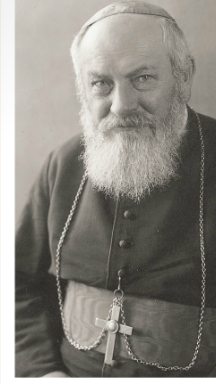
Bishop-Abbot Bonifatius Sauer (辛上院, 1877–1950), founder of the Benedictine monasteries of Seoul and Tokwon, was born on January 10, 1877, at Oberufhausen in the northern part of the Diocese of Fulda, the son of a farmer. He completed his secondary schooling at the Fulda gymnasium, but his father’s failing health cut his studies short. Some time later he went to study at Innsbruck in Austria, and there — moved by a longing for the missions and encouraged by those around him — he entered St. Ottilien at the beginning of February 1899, at the age of twenty-two. After about a year of novitiate he made his monastic profession on February 4, 1900; that autumn he passed the university entrance examination at Münster in Westphalia and studied theology for three years. Ordained a priest at Dillingen on July 26, 1903, he was at once named prefect of the St. Boniface hostel attached to the abbey there, guiding the students’ life and spiritual formation.
When Bishop Mutel, Vicar Apostolic of Korea, touring Europe in search of a religious order to take up educational work in Korea, visited St. Ottilien on September 15, 1908, and asked for missionaries, the abbey accepted and laid plans for Korea. Fr. Bonifatius Sauer, named head of the venture together with Fr. Dominicus Enshoff, left Germany on January 11 of the following year and reached Seoul by way of Japan on February 25. Searching at once for a site, at the end of July, with Bishop Mutel’s help, they purchased about thirty thousand pyong of land at Paekdong below Naksan hill near the East Small Gate. Convinced that the most fundamental mission was to present a life lived according to the Rule of St. Benedict, Fr. Bonifatius pressed the building forward: a provisional monastery was completed on December 6 of that year, and on January 8, 1910, the monastery of St. Benedict in Seoul was raised to an independent conventual priory. Mindful that the order had come to Korea for education, Prior Bonifatius founded in 1910 the four-year Sungkong technical school, and the next year the two-year Sungsin normal school to train teachers for Christian education. As more missionaries arrived and the community grew, the Seoul priory was raised to an abbey on May 5, 1913, and on June 8 of that year Bonifatius was blessed as abbot in the abbey church of St. Ottilien.
As Japan’s seizure of Korea transformed the country’s political and social life, Abbot Bonifatius saw the field of the Seoul monastery’s work narrowing and, under the harshening colonial school policy, the missionaries turning toward parish ministry. In 1914 he submitted to Archabbot Weber a memorandum on the need for a mission territory and discussed the question with Bishop Mutel. The result was that on August 5, 1920, the Holy See entrusted the newly erected Vicariate of Wonsan to the Benedictines; Abbot Bonifatius was named vicar apostolic on August 25 of that year, and on May 1 of the following year was consecrated bishop together with Bishop Devred, coadjutor of Seoul.
The Benedictines took over from the Paris Foreign Missions five parishes: Wonsan and Naepyong in Hamgyong Province, and Samwonbong, Paltogu, and Yongjong in Kando. Bishop-Abbot Bonifatius began his ministry from the Wonsan parish and the Seoul monastery, but the distance between mission field and motherhouse, among other reasons, led him to decide to move the monastery and seminary to Tokwon near Wonsan. Building began at once, and the Tokwon monastery was completed in 1927. In 1928 he set off the Prefecture of Yenki as an independent jurisdiction, and, devoting himself to the growth of the Church in Hamgyong Province, founded new parishes at Singosan, Tokwon, Kowon, Yongheung, Hamhung, Hungnam, Pukchong, Unggi, Nanam, Songjin, Chongjin, and Hoeryong — establishing Haesong schools in most of them.
Bishop-Abbot Bonifatius gave particular care to the Tokwon seminary within the monastery. He built hospitals at the monastery and in several parishes, and set up a printing press in the seminary that published catechisms, missals, the Catholic hymnal, and many other church books. In November 1925 he invited the Missionary Benedictine Sisters of Tutzing to Korea for parish and special ministries. As the vicariate continued to grow, he proposed to the Holy See the separation of the Yenki region of Kando and the Yilan region of Heilongjiang: on July 3, 1928, Yilan was erected as an independent mission, provisionally under his charge, and on July 19 the Prefecture of Yenki was raised to a vicariate, its care passing to the newly appointed Bishop Theodor Breher.
After the move to Tokwon, under the motto “By the Cross and the Rule,” Bishop-Abbot Bonifatius worked to settle and build up the jurisdiction. He took part in the Korean plenary council of 1931 and the meeting of the five Korean ordinaries in 1933; he traveled to Germany from January 1928 to February 1929 for the silver jubilee of Archabbot Norbert Weber, and again from November 1933 to April 1935 for the general chapter of the Ottilien Congregation. He made constant visitations across the vast reaches of Hamgyong Province, and despite straitened finances steadily founded parishes and built schools. When the Vicariate of Wonsan was divided on January 12, 1940, into the Territorial Abbacy of Tokwon and the Vicariate of Hamhung, he was named ordinary of the abbacy and administrator of the vicariate; with the erection ceremony and installation held in the abbey church on May 13 of that year he became canonically the first ordinary of the abbacy — but the outbreak of the Pacific War soon placed heavy restrictions on monastic life and ministry.
After the liberation of 1945 came new trials: under the communist ‘land reform’ decree, an instrument of religious persecution, the monastery lost all its land in 1946. Then, in the night of May 9, 1949, he was arrested by the North Korean communists together with Prior Roth, Subprior Schleicher, and Fr. Klingseis of the seminary faculty, and taken to the Pyongyang prison. There, at seventy-two, his chronic asthma worsened by malnutrition, Bishop-Abbot Bonifatius died in prison on February 7, 1950. Some time later Benedictine brothers and sisters recovered his body and buried it beside the Pyongyang prison.
한국어 원문
서울. 덕원 성 베네딕도 수도원 설립자
신상원 보니파시오 주교 아빠스 1877년 독일 폴다 교구 오베루프하우젠에서 태어났다. 상트 오틸리엔 수도원에 입회하여 1900년에 첫 서원을 하고 1903년에 사제 서품을 받았다. 1908년 도미니코 엔쇼프 신부와 함께 한국 진출 책임자로 임명되어 한국으로 파견된 후 서울 백동 수도원을 세웠다. 1913년 아빠스로 임명되었고, 1920년에는 신설된 원산 대목구장으로 임명되어 이듬해 주교로 성성되었다. 1927년 수도원을 덕원으로 옮기고 본격적인 선교활동을 추진하여 1949년 덕원 수도원이 폐쇄될 때까지 본당 사목, 교육사업, 출판사업, 의료봉사 등을 펼치고 많은 성과를 거두었다. 뿐만 아니라 높은 성덕으로 공동체를 이끌어 덕원 수도원을 선교활동과 수도생활이 완벽히 조화된 이상적인 모델로 만들었다. 북한 공산 정권에 의해 체포된 후 평양 인민교화소로 압송되어 1950년에 옥사하였다.
신상원 보니파시오 주교 아빠스(1877-1950)는 1877년 1월 10일에 독일 헤센주 풀다 교구 북부의 오베루프하우센에서 농부의 아들로 태어나 풀다의 김나지움에서 중등 교육 과정을 마쳤으나 부친의 건강 악화로 더 이상 학업을 수행하지 못했다. 그러다가 얼마 후 오스트리아 인스부르크로 유학을 떠난 그는 그곳에서 선교에 대한 열망과 주위의 권유로 22세 때인 1899년 2월 초에 상트 오틸리엔 수도원에 입회하였다. 약 1년동안의 수련기를 거쳐 1900년 2월 4일 수도 서원을 하였으며, 그 해 가을 베스트팔렌 주의 뮌스터에서 대학 입학 자격 시험을 통과한 후 3년 동안 신학 공부를 하였다. 1903년 7월 26일 딜링겐에서 사제 서품을 받고 곧바로 그곳에 있는 상트 오틸리엔 수도원 부속 성 보니파시오 기숙사의 사감으로 임명된 그는, 학생들의 생활과 영성 지도 신부로 활동을 시작하였다.
한편 한국에서 교육사업을 전개 할 수도회를 찾기 위해 유럽을 순방 중이던 조선 대목구장 뮈텔 주교가1908년 9월 15일 수도원을 방문하여 선교사 파견을 청하자 이를 수락하고 한국 진출 계획을 세웠다. 이에 따라 보니파시오 사우어 신부는 도미니코 엔쇼프 신부와 함께 한국 진출 책임자로 임명되어 이듬해 1월 11일 독일 떠나 일본을 거쳐 2월 25일 서울에 도착하였다. 곧바로 수도원 부지를 물색하던 그들은 그 해 7월말 뮈텔 주교의 도움으로 동소문 부근의 백동 낙산 아래 에 위치한 약 3만평의 대지를 매입하였다. 그런 다음 보니파시오 신부는 성 베네딕도의 수도규칙에 따라 사는 수도 생활을 소개하는 것이 가장 근본적인 선교라고 생각하고 수도원 건립에 박차를 가하였다. 같은 해 12월 6일 임시 수도원 건물이 완공된 데 이어 1910년1월 8일에는 서울의 성 베네딕도 수도원이 원장좌 자립 수도원으로 승격되면서 보니파시오 원장은 수도회가 한국에 진출한 목적이 교육사업에 있음을 감안하여 1910년에 실업 교육을 위한 4년제 숭곡학교를 설립하였고, 이듬해에는 그리스도교적 교육을 담당할 교원을 양성할 목적으로 2년제 사범학교인 숭신학교를 설립하였다. 이어 계속해서 몇 명의 선교사가 더 파견되어 수도원의 규모가 커지자 1913년 5월 5일에는 서울 수도원이 아빠스좌 수도원으로 승격되었고, 보니파시오 원장은 그 해 6월 8일 상트 오틸리엔 수도원 성당에서 아빠스로 축복되었다.
보니파시오 아빠스는 일본 제국이 조선의 국권을 강탈한 후 한국의 정치적, 사회적 상황이 변함에 따라 서울 수도원의 활동 영역이 급격히 축소되고, 일제의 탄압 정책으로 교육 환경이 악화되면서 선교사들이 점차 본당 사목에 관심을 갖고 있음을 깨닫게 되었다. 이에 그는 1914년에 베버 총아빠스에게 전교 지역이 필요하다는 의견서를 제출하고 뮈텔 주교와도 이 문제를 협의하였다. 그 결과 베네딕도회는 1920년 8월 5일 교황청으로부터 새로 설정된 원산 대목구의 사목권을 위임받게 되었으며, 보니파시오 아빠스는 그 해 8월 25일 대목구장으로 임명되었다. 그리고 이듬해 5월 1일 서울 대목구 보좌 주교로 임명된 드브레 주교와 함께 주교로 성성되었다.
이에 베네딕도회에서는 파리 외방전교회로부터 함경도 지역의 원산 본당과 내평 본당을 비롯하여 간도 지방의 삼원동 본당, 팔도구 본당, 용정 본당 등 5개 본당의 사목권을 인수 받았다. 보니파시오 주교 아빠스는 임시로 원산 본당과 서울 수도원을 맡아 교구장으로서의 사목활동을 시작하였으나 선교 지역과 수도원 본원의 거리상 문제와 기타 다른 몇 가지 이유들로 인해 수도원과 신학교를 원산 인근의 덕원으로 이전 하기로 결정하였다. 즉시 수도원 증축 공사에 착수하여 1927년 덕원 수도원을 완공한 보니파시오 주교 아빠스는 1928년에는 연길 지목구를 분할 독립시켰으며, 함경도 지역의 교세 확장에 주력하여 신고산, 덕원, 고원,영흥, 함흥, 흥남, 북청, 웅기, 나남, 성진, 청진, 회령 등에 본당을 신설하였을 뿐만 아니라 대부분의 본당에 해성학교를 설립하여 교육사업을 전개하였다.
보니파시오 주교 아빠스는 특히 수도원 내에 있던 덕원 신학교의 운영과 발전에 큰 관심을 기울였으며 수도원을 비롯한 여러 본당에 병원을 세워 의료 사업을 전개하였고, 신학교 내에 인쇄소를 설치하여 [교리문답], [미사경본], [가톨릭 성가] 등 각종 교회 서적들을 출판하였다. 또한 1925년 11월에는 본당 사목과 특수 사목을 보다 원활히 추지하기 위하여 독일 툿찡의 포교 성 베네딕도 수녀회를 초청하였으며 아울러 원산 대목구의 교세가 계속 성장하자 중국 간도성 연길 지역과 흑룡강성 의란 지역의 정치적 위치를 고려하여 이 지역이 독립을 교황청에 건의 하였다. 그 결과 1928년 7월 3일자로 의란 지역이 독립 포교지로 설정됨과 동시에 임시로 신 보니파시오 주교 관할 아래 있게 되었다. 또 같은 해 7월 19일에는 연길 지목구가 대목구로 승격되면서 간도 지역의 사목권이 새 교구장으로 임명된 백테오도로 신부에게 이관되었다.
보니파시오 주교 아빠스는 덕원으로 이전한 후 “십자가와 규칙으로”라는 모토로 활발한 대내외적인 활동을 통해 교구 정착과 발전을 모색하였다. 그는 1931년에 개최된 ‘조선 대목구 설정 한국 천주교회 공의회’와1933년에 개최된 ‘한국 5교구 주교회의’에 참석 하였으며, 1928년 1월부터 1929년 2월까지 상트 오틸리엔 수도원 총아빠스 노르베르트 베버의 은경축 행사 참석차 독일을 방문한 데 이어, 1933년 11월1부터 1935년4월까지 오딜리아 연합회 총회 참석차 다시 독일을 방문하였다. 그리고 광대한 함경도 전역을 자주 순방하면서 성무를 집행하였고, 재정 궁핍 속에서도 본당 신설과 학교 건립을 꾸준히 추진하여 교세 확장에 기여했다. 그 후 1940년 1월 12일 원산 대목구가 ‘덕원 면속구’와 ‘함흥 대목구’ 로 분리된 후 보니파시오 주교 아빠스는 다시 덕원 면속구장 겸 함흥 대목구의 관리자로 임명되었다. 같은 해 5월 13일 수도원 성당 내에서 덕원 면속구 설정식과 함께 착좌식이 거행됨으로써 보니파시오 주교 아빠스는 교회법적으로 면속구의 정식 초대 교구장이 되었으나 얼마 안가서 태평야 전쟁이 발발함에 따라 수도생활과 사목활동에 많은 제한을 받게 되었다.
8.15 광복 후 보니파시오 주교 아빠스는 공산당이 종교 탄압의 일환으로 시행한 ‘토지개혁령’으로 인해1946년 수도원의 토지를 모두 몰수당하는 등의 어려움을 겪었다. 그러다가 1949년 5월 9일 밤에 수도원장 로트 신부, 부원장 슐라이허 신부, 신학교 교수 클링사이즈 신부 등과 함께 북한 공산당에 의해 체포되어 평양 인민교화소로 압송되었다. 이후 보니파시오 주교 아빠스는 72세의 노구로 지병인 천식이 악화된데다가 영양실조까지 겹쳐 1950년 2월 7일 옥사 하였다. 얼마 후 베네딕도회 소속 수사들과 수녀들에 의해 시신이 발굴되어 평양 인민교화소 옆에 묻혔다.
출처 한국 가톨릭 대백과사전(교회사 연구소), Necrologium(왜관수도원)
분도 창간호 2008년 봄 20-23쪽
Source: the “Martyrs of Tokwon” series published by Waegwan Abbey, reprinted and translated here with permission.
출처: 성 베네딕도회 왜관수도원 ‘덕원의 순교자’ 연재 · 왜관수도원의 허락을 받아 게재·번역합니다.
Thank you for the English version. I wasn’t aware of the amount of work the Abbot had accomplished during his life for the Benedictines in Korea.