Martyrs of Tokwon · 15 / 38
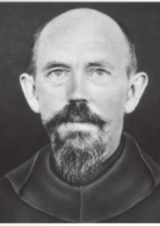
Brother Basilius Hauser (河蓮根, 1886–1950) was born on November 10, 1886, at Polling in the Archdiocese of Munich, and was baptized Martin. His beginnings were hard: the son of an unmarried servant girl, he was small of stature and without particular talents, and his school certificate shows the lowest marks in every subject. From thirteen he learned the baker’s trade. In the life story he wrote when asking admission to St. Ottilien he revealed his calling: “We once performed a play on the persecution of the Christians under the emperor Maximinus — the martyrdom of St. Sebastian; being small, I was given the part of St. Pancras. That, I think, became a blessing to me. I felt something new, and conceived the longing to become a great saint. I have carried this desire a long time, and am always resolved to follow God’s will.”
Brother Basilius entered St. Ottilien in 1911, made his first profession on October 12, 1913, and was sent to Korea on May 3, 1914, arriving in Seoul on May 16 with Brother Germanus Hartmann and Brother Gottlieb Auer. He worked in the kitchen all his life, and so scarcely appears in the chronicles. When the Vicariate of Wonsan was erected in 1920 and most of the skilled brothers went out to the new mission field, he kept the monastery. After the move to Tokwon in 1927 he cooked for the monks and seminarians for a whole year without electricity or running water.
Only when Brother Basilius fell gravely ill did his presence come to light. When he contracted acute nephritis in 1935 the chronicle wrote: “Brother Basilius is ill and cannot work. Only now that he is wholly out of the kitchen do we begin to grasp what that means. With three Korean candidates he provides not only three meals a day but bakes the bread and makes the sausage; wine, and every kind of drink, he makes himself; when milk is left over he makes cheese. Brother Leonard Kim Bok-rae stood in for him some days, but weakened by his chronic illness he can hardly carry himself and would not last a month in the kitchen. So we rejoiced greatly when Brother Basilius, after a fortnight in bed, appeared in the kitchen again — wrapped in layer upon layer of clothing and his fur coat.”
October 13, 1938, was the silver jubilee of his profession. There was no feast, but the chronicle carries this praise: “Until a year ago he worked in the kitchen without tiring. We take this occasion to thank him for his kind and self-sacrificing labor. The bread he baked through the decades, the meals he prepared, the cheese and sausage he made, the wine he pressed are gone — but all of it sustained the bodies and souls of the brothers through those years. This spiritual merit of his will never be forgotten.”
With the Second World War the monastery’s household sank into utter want, and as Brother Basilius could set out ever poorer food, no one thanked him anymore. One day he served half-burnt potatoes; he was himself dismayed and ashamed, but there was nothing else to give. Grumbling was heard here and there — only Prior Lucius Roth quietly began to eat as if he noticed nothing, and later wrote of it: “Our food now bears no comparison with the past. But to press this or that demand on one man goes too far.” In truth, the cook’s existence was noticed only when he erred.
Liberation brought no relief, and on May 10, 1949, Tokwon Abbey was closed by the regime. In the night of May 11 Brother Basilius was carried by truck with the German brothers and Korean priests to the Pyongyang prison, and in June 1949 to the Oksadok camp, where he died on February 14, 1950. Sister Diomedes Meffert, the camp’s physician, testified: “Until the sisters took over the camp kitchen, Brother Basilius Hauser did the cooking with another brother. Always bright and cheerful, freed at last from the duty he had borne so many years, he volunteered for the construction work — carrying stone and clay and water, and helping the carpenters without pause. Then his feet began to swell, and little by little the laughter left him. It seemed already too late. From Christmas he was very careful, but the edema of the skin grew worse; with the new year of 1950 the fluid gathered in his abdomen. He suffered terribly from suffocation and thirst — such patients can hardly digest camp food at all. Often he would say, pitifully: ‘Could we not kill just one sick hen? I long so for chicken soup!’ But no hen might be killed, and our poor patient’s wish was never granted. Having neither medicine nor instrument to draw off the fluid, Brother Basilius Hauser suffered beyond words, and on February 14, 1950, departed for his eternal home.”
한국어 원문
하연근 바실리오수사
덕원수도원 1886년 11월 10일생,독일뮌헨대교구출신 세례명:마르틴 첫서원: 1913년 10월 12일 한국파견: 1914년 5월 3일 소임:백동과덕원수도원주방담당 체포일자및장소: 1949년 5월 11일,덕원수도원 순교일자및장소: 1950년 2월 14일,옥사덕수용소
하연근 바실리오(Basilius Hauser, 河蓮根, 1886-1950) 수사는 1886년 11월 10일에 독일 뮌헨München대교구폴링Polling에서 태어나 마르틴Martin이란 세례명으로 세례를 받았다. 출생부터 시작해서 그의 성장 과정은 순탄치 못했다. 미혼모 하녀의 아들로 태어난 그는 특별한 재능도 없었고 덩치도 왜소했다. 학업도 그리 뛰어나지 못하여 졸업 증명서를 보면 모든 학과에서 가장 낮은 평점을 받았다. 열세 살이 되던 해부터 그는 제빵기술을 배우기 시작했다. 그는 상트 오틸리엔St. Ottilien 수도원에 입회를 청하며 쓴 이력서에서 자신의 성소를이렇게 밝혔다. “막시미누스 황제의 그리스도교 박해를 다룬 연극을 한 적이 있습니다. 성 세바스티아누스가 순교하는 내용이었는데, 키가 작은 나는 성 판크라티우스 역할을 맡았습니다. 그 일이 나에게 축복이 된 것 같습니다. 새로운 것을 느꼈고 위대한 성인이 되려는 열망을 품게 되었습니다. 이런마음을 꽤 오래전부터 품어 왔으며 언제나 하느님의 뜻을 따르려는 각오가 되어 있습니다.”
바실리오 수사는 1911년에 상트 오틸리엔 수도원에 입회하여 1913년 10월 12일에 첫서원을 하고, 1914년 5월 3일 한국에 선교 파견되었다. 1914년 5월 16일, 그는 제르마노 하르트만(Germanus Hartman, 1883-1931)수사와 고델리보아 우어(Gottlieb Auer, 閔鍾德, 1887-1952)수사와 함께 서울에 도착했다. 그는평생 주방에서 일했으므로 수도원 연대기에는 거의 등장하지 않는다. 1920년 원산 대목구가 설정되고 기술 있는 수사들 대부분이 새 선교 지역으로 나갔지만 그는 수도원을 지켰다. 1927년 수도원이 덕원으로 옮겨진 후 거기서 일 년 동안 전기도 수도도없는 상태에서 수도자들과 신학생들에게 음식을 해 먹였다.
바실리오 수사가 중병이 들어 자리에 눕고 나서야 그의 존재가 드러났다. 1935년 그가 급성 신장염에 걸렸을 때의 상황을 연대기는 이렇게 적고 있다. “바실리오 수사가 병에 걸려 일을 못하게 되었다. 그가 주방 일을 아예 못하게되자 어떤 문제가 생길지 그제야 비로소 짐작하게 되었다. 그는 한국인 청지원자 셋과 함께 세끼 식사뿐 아니라 빵을 굽고 소시지를 만든다. 포도주는 물론 온갖 음료도 직접 만든다. 우유가 남으면 치즈를 만들기도 한다. 김복래 레오나르도(金福來, 1896-1955)수사가 며칠동안 그를 대신해 주방에서 일하긴 했다. 그러나 고질병 때문에 쇠약해진 김 레오나르도 수사는 제 몸도 제대로 가누지 못했다. 그 상태로는 주방에서 한 달도 버티지 못할 것이다. 그래서 우리는 바실리오 수사가 보름간의 와병 끝에 일어나 옷을 몇 겹씩 껴입고 털외투까지 걸친 모습으로 다시 주방에 나타났을 때 몹시 기뻤다.”
1938년 10월 13일은 바실리오 수사의 서원 은경축 기념일이었다. 축하 잔치는 없었지만 수도원 연대기에는 다음과 같은 칭송의 말이 실려 있다. “그는 일 년 전까지 지칠 줄모르고 주방 일을 해 왔다. 우리는 이 기회에 그의 친절하고 희생적인 노동에 감사를 표한다. 그가 수십 년간 구운 빵, 그가 마련한 음식, 그가 만든 치즈와 소시지, 그가 짜낸 포도주들은 남아 있지 않지만, 이 모든 것이 지난 세월 형제들의 육신과 영혼을 지켜 주었다. 이러한 그의 영적 공덕은 언제까지나 잊혀지지않을 것이다.”
제2차 세계대전 발발 이후 수도원 살림은 극도로 궁핍해졌고, 바실리오 수사가 점점 변변찮은 음식을 내놓을 수밖에 없게 되자 아무도 그에게 고마워하지 않았다. 어느 날 그가 반쯤 태운 감자를 식탁에 올렸다. 그 자신도 당황하고 부끄러웠지만 달리 내놓을 것도 없었다. 여기저기서 투덜거리는 소리가들렸으나 루치오 로트(Lucius Roth, 洪泰華, 1890-1950) 원장 신부만 모르는 척 조용히 먹기 시작했다. 루치오 원장 신부는 나중에 이런 상황을 편지에 남겼다. “지금 우리 음식은 예전과 비교가 되지 않습니다. 그렇다고 한 사람에게 이런 저런 요구를 하는 것은 좀 지나칩니다.” 사실 주방장의 존재를 확인할 때는 실수할 때 뿐이었다.
해방 이후에도 수도원 형편은 나아질 줄 몰랐다. 급기야 1949년 5월 10일 덕원 수도원은 북한 공산정권에 의해 폐쇄되었다. 바실리오수사는 독일인 수도형제들과 한국인 신부들과 함께 1949년 5월 11일밤에 트럭에 실려 평양 인민 교화소로 이송되었다. 1949년 6월 옥사덕 강제 수용소로 이송되어 거기서 1950년 2월 14일 숨을 거두었다. 옥사덕 수용소의 의사였던 디오메데스 메페르트(Diomedes Meffert, 1909-1998) 수녀가 그의 최후를 이렇게 증언했다. “바실리오 하우저 수사님은 수녀들이 수용소 부엌을 넘겨받기 전까지 동료 수사님 한 분과 함께 취사를 맡았습니다. 늘 밝고 명랑했던 수사님은 오랜 세월 해오던 당신 소임에서 벗어나 공사판 일을 자청하여 돌과 진흙과 물을 날랐고, 목공 일을 돕는 데 여념이 없었습니다. 그런데 발이 부어오르기 시작했고 점차 웃음을 잃어 갔습니다. 때는 너무 늦은 듯이 보였습니다. 성탄절부터는 아주 조심했지만 피부 수종이 점점 악화되었습니다. 1950년이 시작되면서 복수가 찼습니다. 수사님은 숨이 막히고 목이 마르는 끔찍한 고통을 겪었습니다.그런 환자들은 수용소 음식을 거의 소화해 내지 못합니다. 종종 수사님은 처연히 말했습니다. ‘병든 닭 한 마리만 잡으면 안 될까? 닭고기 수프가 먹고 싶은데!” 그러나 닭을 잡아서는 안 되었기 때문에, 우리의 가련한 환자는 소원을 이루지 못했습니다. 복수를 빼는 약이나 기구가 없었기에, 바실리오 하우저 수사님은 말로 표현할 수 없는 고통을 겪다가, 1950년 2월 14일 영원한 본향으로떠나가셨습니다.”
자료출처: Todesanzeige(상트오틸리엔수도원),Necrologium(왜관수도원),원산교구연대기(한국교회사연구소, 1991년), 芬道通史(분도출판사,2009년),덕원의순교자들(분도출판사, 2012년)
분도 2014년 겨울호 44-47 페이지
Source: the “Martyrs of Tokwon” series published by Waegwan Abbey, reprinted and translated here with permission.
출처: 성 베네딕도회 왜관수도원 ‘덕원의 순교자’ 연재 · 왜관수도원의 허락을 받아 게재·번역합니다.
Leave a Reply