Martyrs of Tokwon · 3 / 38
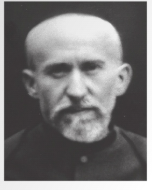
Brother Gottlieb Auer (閔鍾德, 1887–1952) was born on October 25, 1887, at Lauterhofen in the Diocese of Eichstätt, Germany, to the smallholder Michael Auer and his wife Katharina, and was baptized John the Baptist. He grew up with three brothers and three sisters. The family’s slender means obliged him early to a trade besides farming: he learned carpentry and helped support the family before entering St. Ottilien, where he received the name Gottlieb on October 4, 1907, and began his novitiate. He made his first profession in 1909 and his perpetual vows in 1913, and on May 3, 1914, was sent to the Paekdong monastery in Seoul.
He arrived in Korea on May 16 with Brother Germanus Hartmann (1883–1931) and Brother Basilius Hauser (河連根, 1886–1950). Slated to teach carpentry at the Sungkong school, he was swept up on arrival by the First World War: on August 7, 1914, with Brothers Paschalis Fangauer, Eugen Ostermeier, and Januarius Schroetter, he was conscripted to the German garrison at Tsingtao in China. Serving as an infantryman, he was taken prisoner when Tsingtao fell to the Japanese and, with the other brothers except Brother Eugen, passed through a series of internment camps across Japan. The captivity was not without profit: until his release in 1919 he learned architectural drafting from a fellow prisoner. The captive brothers could earn no small amount of money nursing the sick and serving the officers; most of the German prisoners were employees of German firms’ East Asian branches whose salaries were still paid monthly, so the camps lived comfortably enough. He and his confreres won a good name among the Japanese officers and men by caring for the sick and keeping gardens — and they did not forget that they were missionaries, encouraging lapsed Catholics and above all seeing that the dying received the sacraments. When they were released they returned to the monastery with a considerable sum — a great joy to Abbot Bonifatius Sauer, for the war had cut off all funds from Germany and the Seoul monastery had no income but its carpentry shop.
When the Vicariate of Wonsan was erected in 1920 and its care entrusted to the Paekdong monastery, Brother Gottlieb went to Wonsan with Fr. Andreas Eckardt, named pastor there, and other brothers, and threw himself into the mission. In 1922, with Brother Petrus Gernert, he built a school at Munpyong, twenty-five minutes from Wonsan by rail; in 1923 he worked on the enlargement of the Haesong school in Wonsan, where his skill as a trained carpenter counted for much. His gifts served the building of Tokwon Abbey as well: when the new monastery was decided upon in 1926, he surveyed the site together with Fr. Cajetan Vierhaus.
After the move to Tokwon, Brother Gottlieb remained in the monastery and took up photography for the mission’s publicity. He would deliberately take the long mountain paths, photographing the abbey endlessly; his pictures of Tokwon were like landscape paintings — he even caught on camera the locomotive’s plume of steam, hanging in the air for a few seconds before it vanished. Sadly his health was weak, and he was often ill, above all in winter.
When Tokwon Abbey was closed on May 11, 1949, Brother Gottlieb was arrested with his brothers, held in the Pyongyang prison, and moved to the Oksadok camp on August 5. Never strong since Tokwon, he held out astonishingly long thanks to his regular habits and moderation. He sometimes joined the field work, but mostly — especially in the Manpo period — cut and split wood for the kitchen and the heating, careful of his failing health, able at times to rest and to stay indoors on rainy days. Sister Diomedes Meffert (1909–1998) told of his end: “When my medical work left me leisure I sometimes helped him saw; he taught me how to handle saw and pickaxe. On April 4, 1952, while the second charcoal kiln was burning, in weather that snowed and thawed by turns, he went out with the others to fell timber. The snowstorm was fierce; meltwater soaked his straw shoes and he worked trembling with wet feet. His confreres urged him to leave the work early, but it was not allowed. The next day high fever and pain in his side set in. Pneumonia advanced swiftly and no remedy availed; his heart no longer answered the injections. On April 6 he fell asleep in peace. His quiet, delicate, humble, and simple character remains with me always as a deep impression.”
한국어 원문
민종덕 고트리프 수사 덕원 수도원, 1887년 10월 25일 생, 독일 아이슈테트 교구 출신 세례명: 세례자 요한 첫서원: 1909년 10월 10일 한국 파견: 1914년 5월 3일 소임: 건축 담당 체포 일자 및 장소: 1949년 5월 11일, 덕원 수도원 순교 일자 및 장소: 1952년 4월 6일, 옥사덕 수용소
민종덕 고트리프(Gottlieb Auer, 閔鍾德, 1887-1952) 수사는 1887년 10월 25일 독일 아이슈테트Eischtätt교구의 라우터호펜Lauterhofen에서 소농인 부친 미카엘 아우어와 모친 카타리나 아우어 슬하에 태어나 세례자 요한이라는 이름으로 세례를 받았다. 그는 세 형제와 세 누이와 함께 성장했다. 넉넉지 못한 가정형편 때문에 일찍부터 농업 말고 다른 직업을 가져야 했다. 그는 목공기술을 배워 가족을부양하다가 상트 오틸리엔St. Ottilien 수도원에 입회하여 1907년 10월 4일 고트리프라는 수도명을 받고 수련기를 시작했다. 1909년에 첫서원을 한 그는 1913년에는 종신서원을 발하고, 그 이듬해 1914년 5월 3일 서울 백동 수도원으로 선교 파견되었다.
그는 5월 16일 게르마누스 하르트만(Germanus Hartmann, 1883-1931) 수사와 바실리우스 하우저(Basilius Hauser, 河連根, 1886-1950) 수사와 함께 한국에 도착했다. 숭공학교에서 목공을 가르치기로 내정되어 있던 그는 선교지에 도착하자마자제1차 세계대전의 여파에 휩쓸리고 말았다. 1914년 8월 7일 파스칼리스 팡가우어(Paschalis Fangauer, 1882-1950) 수사, 오이겐 오스터마이어(Eugen Ostermeier, 吳利根, 1885-1949) 수사, 야누아리오 슈뢰터(Januarius Schrötter, 楊聖基, 1880-1960)수사와 함께 중국 청도의 독일군 진지로 징집되었다. 보병으로 복무하던 그는 청도 진지가 일본군에게 함락되자, 오이겐 수사를 제외한 다른 수도형제들과 함께포로로 잡혀 일본 각지를 전전하며 수용소 생활을 했다. 고트리프 수사에게 수용소 생활이 무익하지만은 않았다. 그는 1919년 석방될 때까지 수용소에서 동료 포로에게 건축 설계를 배웠다.포로로 잡힌 수사들은 간호사로 일하거나 장교들에게 봉사함으로써 적지 않은 돈을 벌 수 있었다. 독일군 포로들은 대부분 독일 회사의 동아시아 지역 지점에서 일했던 직원들이었다. 수용소에서도 매달 정기적으로 봉급이 지급되었기 때문에 포로들은 대부분 넉넉하게 생활했다. 그와 다른 수도형제들은 환자를 돌보거나 정원을 가꾸면서 일본군 장교와 사병들에게 좋은 평판을 얻었다. 그들은 수용소에서도 선교사인 자신의 신분을 잊지 않고 종종 냉담하고 있는 천주교 신자들을 권면하고 특히 임종에 처한 중환자들이 성사를 받게하였다. 수용소에서 석방되었을 때 그들은 상당한 액수의 돈을 가지고 수도원으로 돌아 왔다. 당시 서울 백동 수도원은 제1차 세계대전으로 독일에서 자금지원이 끊긴 상태였으므로, 목공소 수입 말고는 다른 수입이 없었다. 그 일은 보니파시오 사우어(Bonifatius Sauer, 辛上院, 1877-1950) 아빠스에게 큰 기쁨을 안겨주었다.
1920년 원산 대목구가 설정되고 서울 백동 수도원에 사목권이 위임되자, 고트리프 수사는 원산 본당주임으로 임명된 안드레아스 엑카르트 (Andreas Eckardt, 玉樂安, 퇴회) 신부와 다른 동료 수사들과 함께 원산으로 가서 선교활동에 뛰어들었다. 1922년 그는 베드로 게르네르트(Petrus Gernert, 1882-1949) 수사와 함께 원산에서 기차로 25분 떨어진 문평에 학교를 지었다. 1923년에는 원산 해성학교 증축공사에 참여하였다. 이 공사에서 숙련된 목공기술자였던 그의 기여는 매우 컸다.물론 덕원 수도원 건축공사에도 그의 재능이 발휘되었다. 1926년 수도원 신축이결정되자, 그는 카예타노 피어하우스(Cajetan Vierhaus, 河, 1868-1936) 신부와 함께 수도원이 들어설 터를 측량했다.
수도원이 덕원으로 옮겨진 후 고트리프 수사는 수도원 내에 머물면서 선교사업 홍보용 사진을 찍기 시작했다. 그는 일부러 먼 산길로 돌아다니며 수도원 사진을 엄청나게 찍었다. 그가 찍은 덕원 수도원 사진은 한 폭의 풍경화 같았다. 몇 초 동안 공중으로 떠오르다 곧 사라지는 기관차의 증기구름까지 카메라에 담았다.하지만 유감스럽게도 그는 건강이 약해서 자주 아팠다. 특히 겨울에는 자주 병상에 누워야했다.
1949년 5월 11일 덕원 수도원이 폐쇄되면서 고트리프 수사는 수도형제들과 함께 체포되어 평양 인민 교화소에 수감되었다가 8월 5일 옥사덕 수용소로 옮겨졌다. 그는 덕원에서부터 건강하지 못했지만 규칙적인 생활과 절제 덕분에 놀라울 정도로 오래 버텼다. 가끔 그는 들일에도 참가했지만 대부분, 특히 만포 시기에는 부엌과 난방에 쓸 나무를 자르고 쪼개는 일을 했다. 이때 그는 자신의 약해진 건강에 주의하며 때로는 휴식시간을 가질 수도 있었고, 비가 오는 날에는 집에 있을 수도 있었다. 디오메데스 메페르트(Diomedes Meffert, 1909-1998) 수녀는 그의 마지막을 다음과 같이 전했다. “진료 외에 여가가 생기면 가끔 그의 톱질을 도왔다.그는 내게 톱질과 곡괭이 다루는 법을 가르쳐 주었다. 두 번째 숯가마가 가동 중이던 1952년 4월4일, 눈이 내렸다 녹았다 하는 날씨에 그는 다른 사람들과 함께벌채를 하러 갔다. 눈보라가 심했고, 눈 녹은 물이 짚신을 적셔 젖은 발로 덜덜 떨며 일을 했다. 동료 수도자들이 일찍 일터를 떠나라고 충고했지만 허락되지 않았다. 다음 날 고열과 옆구리 통증이 엄습했다. 폐렴이 급속도로 진행되어 백약이무효였다. 심장은 주사에도 반응하지 않았다. 4월 6일 그는 평온하게 잠들었다. 조용하고 섬세하며, 겸손하고 소박한 그의 성품은 내게 늘 깊은 감동으로 남아 있다.”
자료출처 Todesanzeige(상트 오틸리엔 수도원), Necrologium(왜관 수도원),원산교구 연대기(한국교회사연구소, 1991년), 芬道通史(분도출판사, 2010년)
분도 2011년 여름호 26-27 페이지
Source: the “Martyrs of Tokwon” series published by Waegwan Abbey, reprinted and translated here with permission.
출처: 성 베네딕도회 왜관수도원 ‘덕원의 순교자’ 연재 · 왜관수도원의 허락을 받아 게재·번역합니다.
Leave a Reply