Martyrs of Tokwon · 4 / 38
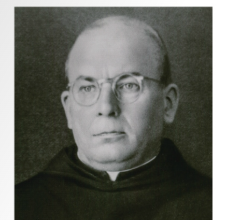
Fr. Canut Graf des Enffans d’Avernas (羅國宰, 1884–1950) was born on March 11, 1884, at Schirmdorf in the Diocese of Graz-Seckau, Austria (today Apače in the Diocese of Murska Sobota, Slovenia), and was baptized Benedikt. He came of an ancient noble house whose lineage reaches back to the fourteenth century; settled near Brussels, the family had moved to Austria in the eighteenth century. His father was Count Heinrich, his mother Countess Anna Gräfin Plaz. Of their three sons, two — Benedikt and Clemens — entered St. Ottilien and were sent to Korea, where both died; the third, Bruno, entered the Beuronese abbey of Seckau and was sent to a new foundation in Brazil.
Of his life before the monastery we know only what his letters suggest. He studied at the Stella Matutina gymnasium at Feldkirch, then read law at university before entering the army in 1906, serving as a lieutenant in Tyrol. A letter of March 22, 1911, records that he had been accepted by St. Ottilien and had completed a retreat at Feldkirch. After a few weeks’ postulancy he began his novitiate under the name Canut and made his first profession on July 28, 1912. Having completed philosophy and theology at the Dillingen seminary and the University of Munich, he was ordained a priest on August 13, 1914 — before his solemn vows, for the World War had broken out and he served as a military chaplain. He made his perpetual profession on August 27 of the following year. On January 16, 1921, Fr. Canut was sent to Korea, where his younger brother Fr. Leopold (羅碧宰, 1887–1944) had lived at the Paekdong monastery since 1913. With scarcely any Korean, he was named third pastor of the Samwonbong parish in North Kando about May — the Paekdong monastery, which had taken over Hamgyong and North Kando from the Paris Foreign Missions, was short of priests. Soon he was transferred as assistant to the Wonsan parish. After two years of mission work at Wonsan he moved in August 1923 to the Naepyong parish, first as interim and soon as tenth pastor, and served there eleven full years. Naepyong parish was the successor of the Anbyon parish founded in 1887, moved to Naepyong in February 1896; but after the Kyongwon rail line opened, the district around Singosan station outgrew Naepyong and the mission work grew difficult. He therefore bought houses near the station for a church and rectory and moved the parish there in the early 1930s — from which time it was called the Kosan parish. When serious heart and kidney trouble made ministry impossible, he left Kosan about July 1934, stayed at the Wonsan parish for treatment, and said Mass for the Tutzing Benedictine sisters at Wonsan. In early December he went to the monastery of San Benito in the Philippines to recover, returning restored on October 5, 1935. For nine years thereafter he directed the spiritual life of the sisters at the Wonsan convent, returning to Tokwon Abbey on June 13, 1943.
When Tokwon Abbey was closed on May 11, 1949, Fr. Canut was arrested with his brothers, held in the Pyongyang prison, and moved on August 5 to the Oksadok camp — so feeble by then that he rode an ox up to the camp. Even so he helped with the farm and kitchen work with all his remaining strength. The next year the war broke out, and when the North Korean army was thrown back by the allied offensive, he and his companions endured the ‘death march’: it reached Manpo on October 25, crossed the border into Manchuria on the 27th, then turned back to Manpo. From the crossing of the Yalu his strength failed; he lay senseless wrapped in a straw mat, and died on November 6. Sister Diomedes Meffert (1909–1998), who made the death march with him, testified: “Whoever did not want to die by the roadside had to keep walking. On the way back to Manpo the sick were promised a truck, and so they waited on and on in the open field through a bitterly cold night — but in the end they had to walk back to the Manpo prison. These torments broke Fr. Canut’s strength. He received the anointing of the sick and died quietly, without pain. Until the next day we had to see him lying on the floor of the empty side room, in the short gray prisoner’s uniform, a log for a pillow. Even in that pitiable state we were moved by the noble peace and dignity spread over his face. The next day Korean prisoners came and took the body away. Later one of these prisoners told our priest exactly where he was buried. The North Korean government made a point of telling us, before we left the country, that they had transferred Fr. Canut’s remains, with those of the others who died at Manpo, to a new grave.”
한국어 원문
나국재 카누토 신부
나국재 카누토(Canut Graf des Enffans d’Avernas, 羅國宰, 1884-1950) 신부는 1884년 3월 11일 오스트리아의 그라쯔-세카우Graz-Sceckau 교구 쉬름도르프Schirmdorf에서 태어나 베네딕트Benedikt라는 이름으로 세례를 받았다. 쉬름도르프는 현재 슬로베니아의 무르스카 소보타Murska Sobota 교구에 속하며, 아파체Apace라고 불린다. 귀족 혈통을 이어받은 그는 14세기로 거슬러 올라가는 유서 깊은 영주가문 태생이다. 브뤼셀 인근에 터를 잡았던 그의 가문은 18세기에 오스트리아로 이주했다. 아버지는 하인리히Heinrich백작이었고, 어머니는 안나 그레핀 플라쯔Anna Gräfin Plaz 백작부인이었다. 그의 부모는 슬하에 아들 삼형제를 두었으며, 두 아들 베네딕트와 클레멘스는 상트 오틸리엔 수도원에 입회하여 한국으로 파견되어 선교활동을 하다가 모두 한국에서 선종하였다. 나머지 아들 브루노는 보이론 연합회의 세카우 수도원에 입회하여 브라질에 새로 설립된 수도원으로 파견되었다.
수도원에 입회하기 전 그의 생애에 대하여는 그가 쓴 서신들을 통하여 추정할 뿐이다. 그는 펠트키르히Feldkirch에 있는 스텔라 마투티나(Stella Matutina, 새벽별 – 성모님의 별칭) 김나지움에서 공부했다. 그러고 나서 대학에 들어가 법학을 전공하다가 1906년 군대에 입대했다. 그는 티롤지방에서 소위로 군복무를 했다. 1911년 3월 22일에 그가 쓴 한 편지에는 상트 오틸리엔 수도원으로부터 입회허락을 받았으며, 펠트기르히에서 피정을 마쳤다는 내용이 나온다. 그는 상트 오틸리엔 수도원에 입회하여, 몇 주간의 청원기를 거쳐 카누토라는 수도명으로 수련기를 시작하고 1912년 7월 28일 첫서원을 발했다. 딜링엔 신학원과 뮌헨 대학에서 철학과 신학 공부를 마친 그는 1914년 8월 13일에 사제로 서품되었다. 제1차 세계대전이 터지는 바람에 그는 종신서원을 하기도 전에 사제품을 받고 군종신부로 참전했다. 그는 이듬해 8월 27일에 종신서원을 발했다. 1921년 1월 16일 카누토 신부는 한국으로 선교 파견되었다. 그의 동생 레오폴드(Leopold Graf des Enffansd’Avernas, 羅碧宰, 1887-1944) 신부는 1913년부터 서울 백동 수도원에 파견되어 살고 있었다.한국말을 제대로 배우지 못한 채, 카누토 신부는 5월경 북간도 삼원봉三元峰 본당에 제3대 주임으로 부임했다. 당시 함경도와 북간도 지역을 파리 외방전교회로부터 인수받은 백동 수도원에 사제수가 부족하였기 때문이었다. 얼마 안 되어 그는 원산 본당 보좌신부로 발령이 났다. 원산에서 2년 동안 전교 활동을 한 그는1923년 8월 내평內坪 본당으로 부임하여 임시 주임을 맡다가 곧 제10대 주임으로 임명되었다. 내평에서 그는 꼬박 11년간을 사목했다. 내평 본당은 1887년 설립된 안변 본당의 후신이다. 본당은 1896년 2월 내평으로 이전되었다. 그러나 경원선 철도가 개통된 이래 내평보다는 신고산역 지역이 발전하게 되었고, 따라서 전교 활동에 어려움이 있었다. 이에 그는 신고산역 인근에 있던 가옥들을 매입하여 성당과 사제관을 마련한 뒤 1930년 초반에 본당을 이전했다. 이때부터 이 본당은 ‘고산高山 본당’으로 불리게 되었다. 심장과 신장에 큰 무리가 와서 사목활동을 하기가 어려워진 그는 1934년 7월경 고산을 떠났다. 그는 원산 본당에 머물며 진료를 받았고, 툿찡 포교 베네딕도회 원산 수녀원에 가서 미사를 드려주었다. 그 해 12월 초 그는 요양을 위해 필리핀의 산 베니토San Benito 수도원으로 떠났다가 원기를 회복하고 1935년 10월 5일 원산으로 돌아왔다. 그 후 그는 9년 동안 원산 수녀원에서 수녀들의 영성생활을 지도하다가 1943년 6월13일 덕원 수도원으로 돌아갔다.
1949년 5월 11일 덕원 수도원이 폐쇄되면서 카누토 신부는 수도형제들과 함께 체포되어 평양 인민 교화소에 수감되었다가 8월 5일 옥사덕 수용소로 옮겨졌다. 그는 옥사덕으로 올 때에 소를 타고 올 정도로 기력이 쇠해 있었다. 그럼에도 그는 수용소에서 온 힘을 다해 농사일과 부엌일을 도왔다. 이듬해 6.25전쟁이 터졌고, 초반에 승기를 잡았던 북한군이 연합군의 공세에 밀리게 되자, 그와 동료들은 이른바 ‘죽음의 행진’을 겪어야만 했다. 죽음의 행진은 10월 25일 만포滿浦에 이르렀다가 국경을 넘어 10월 27일 만주로, 다시 만포로 이어졌다. 그는 압록강을 건널 때부터 기력을 잃어 거적 속에서 정신없이 누워 있다가 11월 6일 선종했다. 그와 함께 죽음의 행진을 했던 디오메데스 메퍼트(Diomedes Meffert, 1909-1998) 수녀는 그의 마지막 순간을 이렇게 증언했다. “길가에서 죽고 싶지 않으면 계속해서 걸어야 했다. 만포로 되돌아오는 길에 환자들은 트럭을 타고 오기로 약속되어 있었다. 그래서 그들은 혹독하게 추운 밤을 들판에서 계속 기다렸다. 하지만 결국은 걸어서 만포 감옥으로 돌아와야만 했다. 이러한 고난은 카누토 신부의 체력을 매우 떨어뜨렸다. 그는 병자성사를 받고 나서 고통 없이 조용히 사망했다. 다음날까지 우리는 그가 짧은 잿빛의 죄수복을 입고 머리엔 통나무를 벤 채 빈 옆방의 바닥에 누워 있는 것을 봐야만 했다. 우리는 그렇게 처참한 상황에도 불구하고 그의 얼굴에 퍼진 고귀한 평온함과 숭고함에 감동받았다. 다음날 한국인 포로들이 와서 시신을 가지고 갔다. 나중에 이 포로 중 한 사람이 우리 신부에게 그가 매장되어 있는 곳을 정확하게 알려주었다. 북한 정권은 우리가 북한을 떠나기 전에 만포에서 사망한 다른 사람들의 유골과 함께 카누토 신부의 유골을 새 무덤으로 이장했다는 것을 분명히 밝혔다.”
자료출처 Todesanzeige(상트 오틸리엔 수도원), Necrologium(왜관 수도원), 원산교구 연대기(한국교회사연구소, 1991년), 원산수녀원사(포교 성베네딕도 수녀회, 1988년)
분도 2010년 여름호 8-9페이지
Source: the “Martyrs of Tokwon” series published by Waegwan Abbey, reprinted and translated here with permission.
출처: 성 베네딕도회 왜관수도원 ‘덕원의 순교자’ 연재 · 왜관수도원의 허락을 받아 게재·번역합니다.
Leave a Reply